




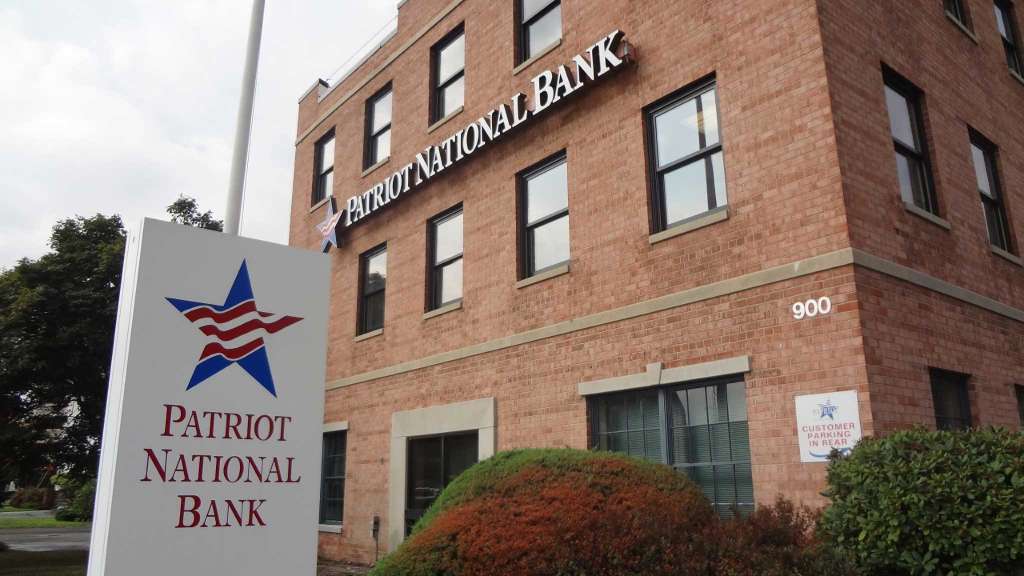
Courtesy photo / File
Patriot Bank’s parent company will now be the surviving entity following its merger with American Challenger Development Corp., a change from the original merger agreement between the two Stamford-based companies.
The bank said in securities filings that the two companies had amended the structure of the transaction, which will now see American Challenger merging into Patriot National Bancorp, the surviving entity of the deal.
When announcing the merger in November, the two companies said they would structure the deal as a reverse subsidiary merger, where American Challenger would become a wholly owned subsidiary of Patriot. According to the latest amendment to the merger agreement, American Challenger will no longer exist following the deal.
Patriot Bank has $947 million in assets and eight branches in Fairfield and New Haven Counties, as well as one branch in Scarsdale, New York. American Challenger was formed in January 2020 to establish a new digital bank that would operate nationally.
The companies said in November that they would operate two divisions: the traditional Patriot Bank business and American Challenger’s digital bank.
“We’re excited to have engineered this industry-disrupting merger,” Patriot Chairman Michael Carrazza said in a statement in November. “The combination transforms Patriot to what will become the largest digital bank in the U.S. Customers will benefit from an expanded array of services and a tech-savvy banking experience, while shareholders should benefit from the compelling value that will be created.”
Patriot also said in the security filings that American Challenger had sold approximately $7.5 million of its preferred stock in a private placement transaction to meet its working capital and funding needs. According to the terms of the private placement, American Challenger’s preferred stockholders could have their preferred stock redeemed on June 30. If the merger with Patriot is not completed by that date, the preferred stockholders also could cause American Challenger to sell or dispose of all or substantially all of its assets or pursue a combination with a different entity.
This is the second amendment to the merger agreement. A previous amendment to the agreement involved terms related to a commercial loan portfolio that the companies needed to acquire as a closing condition of the capital raise required for the transaction.

