




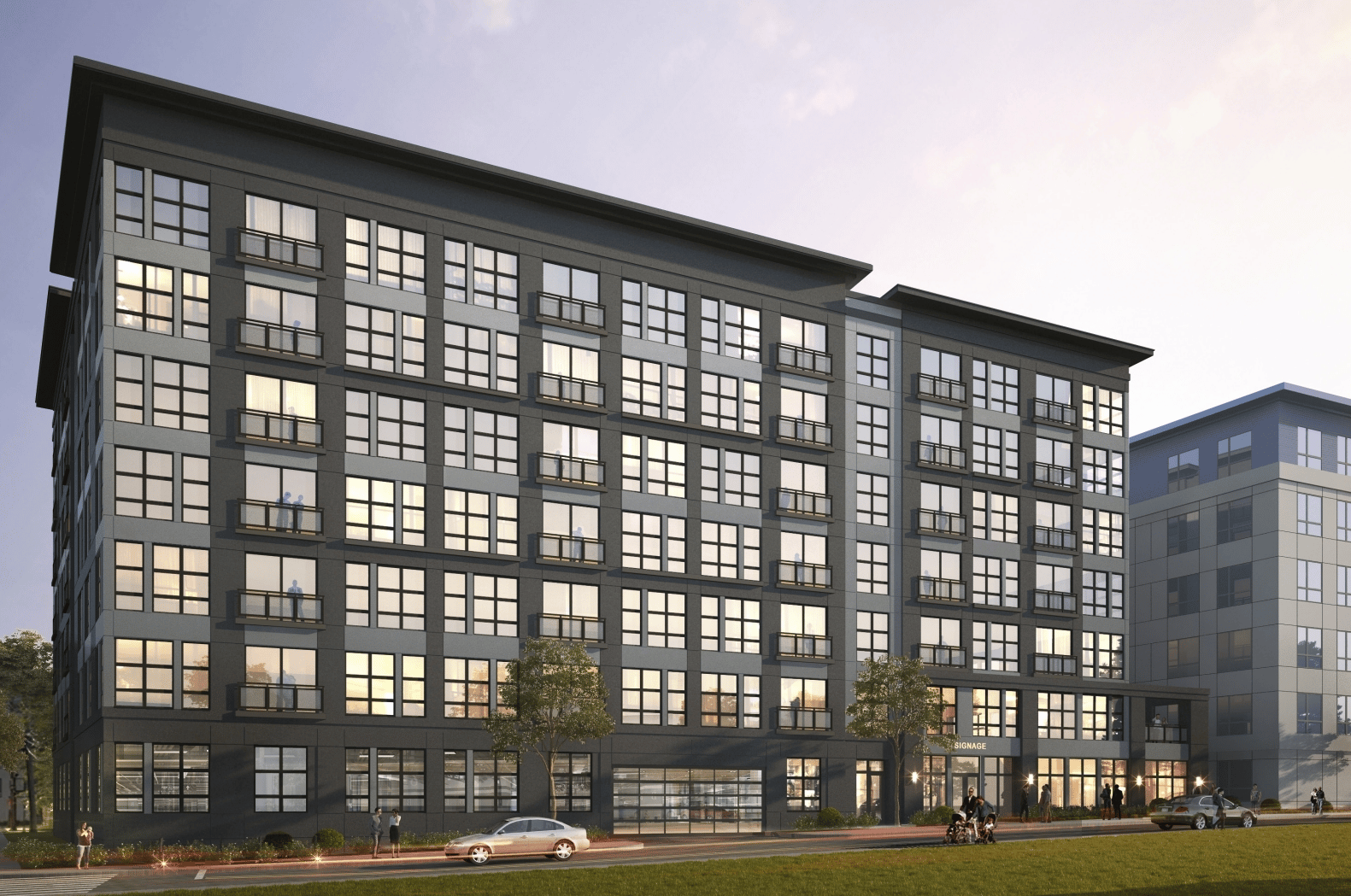
Rising demand for apartments in New Haven is translating into rising rents, higher prices for investment sales and a busy pipeline of new developments including new construction, office conversions and industrial-to-loft projects. Stamford-based RMS Companies recently received approval for a 112-unit apartment building at 188 Lafayette St. Image courtesy of Lessard Design
A perfect storm of economic factors is benefiting New Haven’s multifamily market, which is being cited as a national model of urban centers’ swift recovery from the pandemic’s disruptive influence on high-density.
New York City rents have rebounded to pre-pandemic levels, emphasizing the relative affordability of secondary markets such as New Haven. Flexible office work arrangements have changed commuting patterns and driven down apartment vacancies. Barriers to development in Connecticut suburbs contribute to across-the-board increases in housing prices, forcing potential first-time homebuyers to remain in the rental pool longer. And new jobs in New Haven’s growing life science industry clusters contribute to demand for rental housing.
“It’s an eds-and-meds employment base, and all of the affiliated industry that trails that very significant core business: biotech, medical research, financial services and other well-paying gray- to white-collar jobs,” said Victor Nolletti, executive managing director of investments at Marcus & Millichap in New Haven.
Apartment vacancies in New Haven’s non-central business district recorded the fourth-steepest drop in vacancies among the 82 largest U.S. metros from March 2020 to December 2021, according to a report analyzing apartment demand in central business districts released this week by Moody’s Analytics. The vacancy rate sat at 3.3 percent in December. Over the same period, average rents rose from $1,337 to $1,539.
The recent increases pushed New Haven into Moody’s list of metros that are considered “rent-burdened” because renters pay at least 30 percent of their income toward housing.
“New Haven is benefiting from its proximity to New York,” said Lu Chen, a senior economist for Moody’s Analytics. “As the home of Yale University, it has the ability to attract economic growth. And its relatively lower rent provides an alternative for people considering lower-cost areas.”
The shrinking affordability rate hasn’t gone unnoticed by New Haven officials. The City Plan Commission last month enacted an inclusionary zoning ordinance that requires multifamily developers to include 10-percent income-restricted units in new projects, even as developers received approval for five projects totaling 475 units that were submitted before the new law takes effect.
Multifamily Investors Accept Lower Yields
New Haven’s improved market fundamentals have prompted investors to dig deeper to bid on properties, according to Marcus & Millichap’s report. With many apartment properties available in the $1 million to $2 million price range, investors now are willing to accept lower yields comparable to Fairfield County.
Migrating New Yorkers have added to the tenant pool throughout the southwestern Connecticut market. Rents in New York rose 33 percent between January 2021 and January 2022, according to ApartmentList, the biggest increase among the 100 cities the online listing site tracks.
Beyond the flight-to-affordability, New Haven has benefited from the massive uptick in venture capital investment in life science companies and the well-paying jobs they create.
Recent life science projects include Winstanley Enterprises’ 525,000-square-foot development 101 College St. – which is partially leased to Yale School of Medicine – and Twining Properties’ redevelopment of the Winchester Works property are being augmented by new life science incubators by private developers, nonprofits and the BioCT industry group.
The industry’s growth augments demand from Millennial office workers who no longer commute daily to New York or other job centers but prefer an urban lifestyle, Marcus & Millichap’s Nolletti said.
“You can live in a class A or B asset that has walkability, but you’re not in an overly dense environment such as core New York or the boroughs,” he said. “A lot of it is the shift in our work structure. I think it’s unlikely the five-day office work week becomes the norm again.”

