




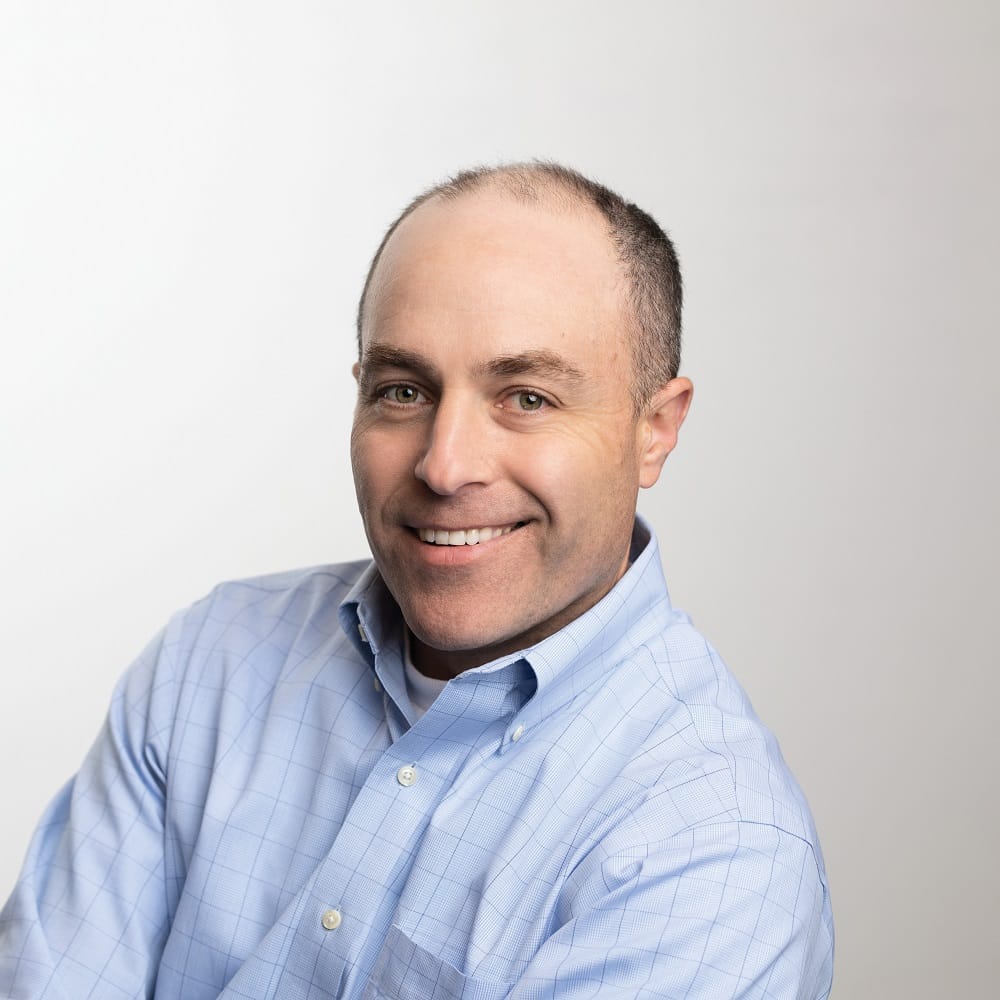
Jeffrey J. Wyszynski
Principal, Tecton Architects
Age: 46
Industry experience: 24 years
Hartford-based Tecton Architects has a steady focus on health care and education designs, including a recent project that won statewide recognition from the CREW-CT organization at last month’s annual awards ceremony. The firm designed a new infusion center at Connecticut Children’s Medical Center in Farmington that’s equipped with customized video displays and technology to simulate a variety of natural environments. Jeff Wyszynski joined Tecton in 2004 and was named chief operating officer in 2012.
Q: What was the impetus for Tecton Architects’ move to its new location at 34 Sequassen St. last winter?
A: It’s a very contemporary office with an open environment and a lot of collaborative space. We’d been in our previous location for almost 30 years and we really wanted to reinvent the office space and how we work because technology was changing. Moving to this location allowed us to do that, rather than trying to renovate in place, this allowed us to create a space. When the pandemic started, we were looking at work-from-home policies before COVID started and were testing out our remote PC’s, and we’re still working from home. We haven’t skipped a beat. The piece that’s missing is people want the social interaction.
Q: Your designs for the Medical Center Infusion Center at Connecticut Children’s Medical Center won top honors at the CREW-CT awards last month. What were the hospital’s needs and goals for that facility?
A: Their operations were inadequate and they were in less than 400 square feet in their existing hospital. They had six infusion chairs. It was part of their strategic plan to put a focus on the children and their experience. That’s the driving story behind the project. It’s less about the walls and doors. They really wanted to give the patients an escape, a different environment and a different world. The term the team came up with was a “mystical adventure.” It is a place to free your mind, not just to receive treatment. Everybody wanted to give the patients an experience. At the heart of the floor plan was a technology tree at the nurse’s station where you can program with different color settings, visions and displays. They have displays in each of the treatment areas. You can play games with other children who are also getting treatment. It was really customizable, which was really neat. What they were trying to do is create a theme of adventure. There’s a waterfall theme in the lobby reception area, and depending upon the type of treatment and how long you’ll be there, there’s rooms made to look like tenants, and what they call campers, a more enclosed room for the patients who stay there for an extended period of time. That was made to look like an Airstream camper.
Q: What percentage of the practice is health care related?
A: We’ve been running about 25 to 30 percent. A lot of it is acute care, a lot of treatment centers and some on-campus work. Beyond-campus work has slowed because of the different [COVID-19] requirements. You can’t get into some of these places like you used to, but that market is still pretty active, more on the outpatient clinic area side
Q: In your education practice, what are the latest design trends for primary and secondary schools?
A: It’s really about being net-neutral or net-positive as far as energy consumption. We also incorporate the WELL building design: a measurement of the success of a project on the human scale instead of the building metrics. We’ve incorporated a lot of WELL into our education practice, because it can be woven into the curriculum as well. We’re doing more ICF (insulated concrete form) construction, including an elementary school in Brookfield. It’s an extremely long-lasting building envelope, but it’s also extremely energy-efficient.
Q: Are open classrooms staging a comeback?
A: I wouldn’t say open classroom, but I would say flexible and adaptable spaces. You see them in health care: sliding glass doors and walls, so you can open one space or the other. The idea that you can easily combine two classrooms or open up a wall to a corridor for presentations: that has really taken hold.
Q: How is the leadership structure divided at Tecton Architects?
A: We’re a second-generation firm. I’m the chief operating officer and chief financial officer, and Ted Cutler is the CEO. The two of us have been running it since the founding partners retired in 2011.
Q: Where are the growth opportunities for Tecton in building sectors or geographic markets?
A: We are planning to expand into Massachusetts with most likely an office in central Mass., and we do an awful lot of public safety projects. That sector has been successful for us, so we want to leverage our success with expansion into Massachusetts. We’re still exploring the right location.
Wyszynski’s Five Favorite Childhood Movie Classics You Should Watch With Your Kids:
- “Star Wars”
- “Indiana Jones”
- “Goonies”
- “ET”
- “Back to the Future”

